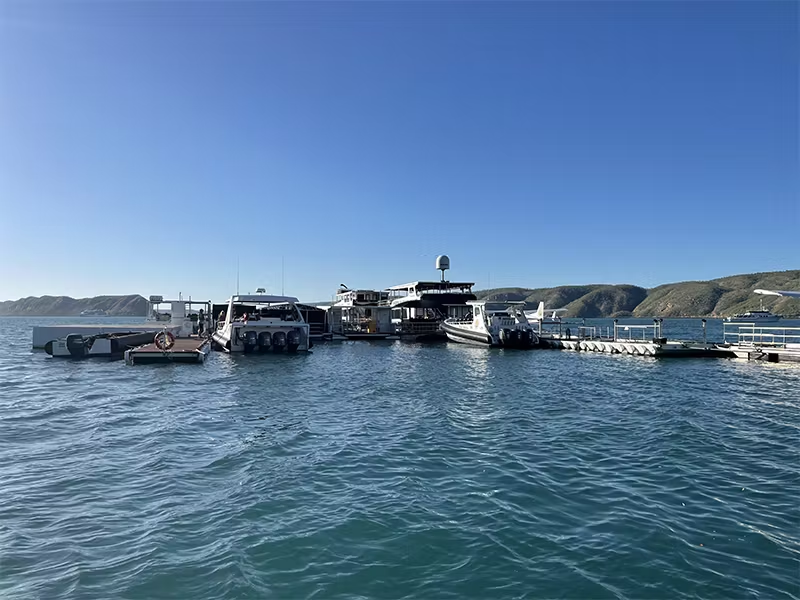
Horizontal Falls is one of Australia's most extraordinary natural attractions and one of the Kimberley's most famous landmarks.
At first glance, the phenomenon appears impossible. Instead of water flowing vertically over a cliff like a traditional waterfall, massive volumes of seawater surge horizontally through narrow gaps in a coastal mountain range.
So how does this happen?
The answer lies in a unique combination of geography, tidal movements and the Kimberley's extreme tidal range.
The Short Answer
Horizontal Falls are formed when enormous tidal movements force seawater through two narrow gaps in the McLarty Range within Talbot Bay.
As water levels rise and fall on either side of the gaps, powerful currents are created, causing water to surge through the openings and produce the appearance of a horizontal waterfall.
Unlike a traditional waterfall, the water moves sideways rather than vertically.